
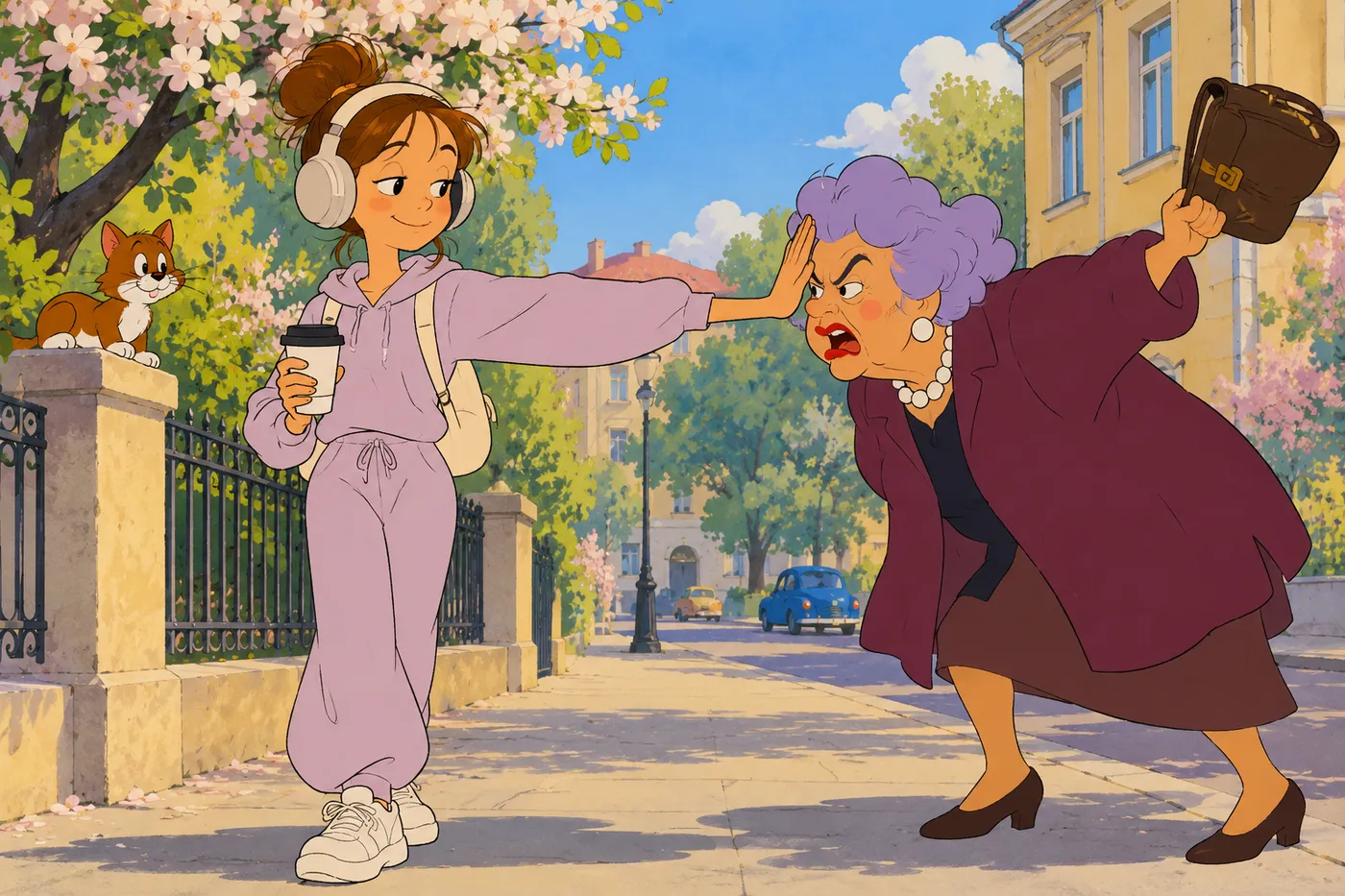
Someone you love told you they were "setting a boundary," and somehow it ended with you doing what they wanted. Or you said it yourself, and felt a small guilty flicker, because the word sounded cleaner than the thing you meant.
Therapy speak is everywhere now, and much of it has helped. People have language for harm that used to be invisible. But a word that can name harm can also be used to do it, and boundaries are the word this happens to most.
What boundaries actually are
Henry Cloud and John Townsend, whose book Boundaries brought the term into kitchens everywhere, describe a boundary as a property line. It marks what you are responsible for: your feelings, your choices, your behaviour, your yes and your no.
Notice what is inside the line. You. Not the other person. A boundary says I will leave the room if you shout. It does not say You are not allowed to shout. The first is something you control. The second is a demand with a therapeutic haircut.
A boundary is about what you will do, not what someone else must do.
When is a boundary really control?
Here is a quick test. A boundary makes space for the other person to make their own choice and live with your response. Control removes their choice by making the cost too high.
"I need you to stop seeing your friend, that's my boundary" is a demand. "I am not comfortable with that, and I will think about what it means for us" is a boundary. The first uses the word to end the conversation. The second opens one, with consequences you are willing to own.
Weaponised therapy speak has a tell: it arrives finished. There is nothing to discuss, because you have been pre-diagnosed. Any objection becomes further evidence.
If the word ends the conversation instead of starting one, it is being used as a wall, not a line.
Gaslighting, toxic, narcissist: the inflation problem
The APA Dictionary of Psychology defines gaslighting as manipulating someone so they come to doubt their own perceptions and sanity. That is a specific, deliberate pattern. It is not your partner remembering a dinner differently.
The same stretching happens to "toxic" (someone whose needs clash with yours) and "narcissist" (someone who hurt you and did not apologise well). When every disagreement is gaslighting, the word stops protecting the people it was built for. And when you call someone a narcissist, you have made them a category rather than a person, which conveniently means you no longer have to hear them.
Clinical words make you feel certain. Certainty is not the same as being right.
What Fleabag knew about saying the real thing
Fleabag is a series about a woman who cannot say the real thing, so she says it to us instead, glancing at the camera over everyone's shoulder. Her stepmother is a master of the weaponised nicety: every cruelty wrapped in a soft voice and a reasonable tone, impossible to object to without seeming unreasonable yourself. That is therapy speak's cousin. Polished language used to win.
Then the priest arrives, and he does something no one else has done. He notices her leaving. "Where did you just go?" He refuses the polished version and asks for the actual one. The scene lands because it is the opposite of a diagnosis. He does not tell her what she is. He asks where she is.
That is the move. Not "you are being toxic" but "I felt small when you said that." Not "I'm setting a boundary" but "I'm going to go home now, and I'd like to talk tomorrow." Plain words are harder to say because they can be answered. That is the point.
Try this with a card
Next time a therapy word is on the tip of your tongue, try this first.
- Draw. Pull one metaphoric card and set it beside the sentence you were about to say.
- Look. Find the figure or object in the image that is closest to how you feel right now, not how you want to appear. Notice if it is defending, hiding, reaching or leaving.
- Ask two questions. What am I actually afraid will happen if I say it plainly? and What do I want from this person, in one ordinary sentence? Then say that sentence instead of the word.
If you want to find the feeling before you find the word, the Emotion map is built for that.
If you are on the receiving end of language that always ends the conversation, and you have started doubting your own memory of events, that is worth bringing to a therapist, not working out alone.
Or start smaller tonight. Draw a card and ask it where you just went.