
tags
#boundaries
11 posts

Forgiveness vs Reconciliation: Two Different Doors
Forgiveness happens inside you. Reconciliation happens between two people, and only when it is safe. Here is how to tell the doors apart.

Can We Be Friends? Can I at Least Follow You on Instagram?
Follow, yes. Friends, no — and the no is not a rejection, it is the thing that makes the room work. Here is the honest reasoning, including what you would lose if the answer were yes.

Quiet Quitting: What Your Job Is Protecting You From
Quiet quitting is a question in disguise. Not "do I care about work?" but "what would I have to face if I cared less?"

Recovering From Fawning: The No You Never Said
Recovering from fawning means learning the difference between kindness and fear, then practising small refusals. Here is how to start.

Boysober and Decentering Men: What a Dating Detox Does
Boysober and decentering men explained — what a dating detox is, what research says about singlehood and self-concept, and what fills the centre.
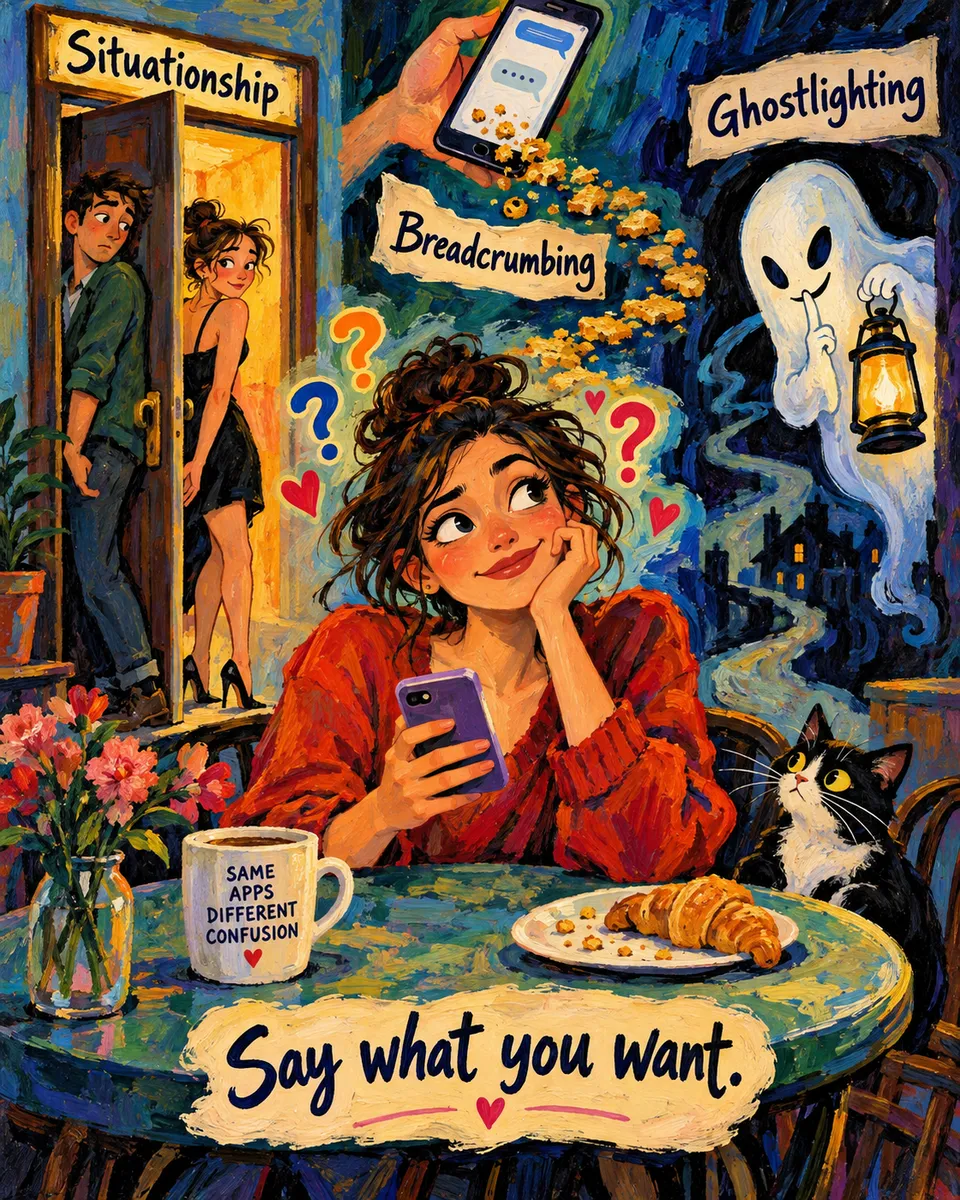
Dating Slang: Situationship, Breadcrumbing, Ghostlighting
Situationship, breadcrumbing, ghostlighting — what the 2026 dating dictionary is really describing, and how to say what you want instead.

Therapy Speak — When "Boundaries" Becomes a Weapon
Boundaries, gaslighting, toxic, narcissist. The words were meant to free you; sometimes they're used to win. How to tell, and how to say the real thing.

Emotionally Immature Parents: The Lindsay Gibson Effect
What emotionally immature parents do, Gibson's four types, the research behind the idea, and the critique worth hearing before you detach.

Hyperindependence: When "I Don't Need Anyone" Is Trauma
Hyperindependence is not a diagnosis, but compulsive self-reliance is a well-studied way people cope after being let down. Here is how to tell the difference.

Eldest Daughter Syndrome: The Child Who Ran the House
Eldest daughter syndrome isn't a diagnosis, but parentification is real. What research says about birth order, family roles and the kid who held it together.

No Contact: Family Estrangement Explained
Going no contact with family is more common, more ambivalent and less final than the internet suggests. Here is what the research shows, and a card practice.