
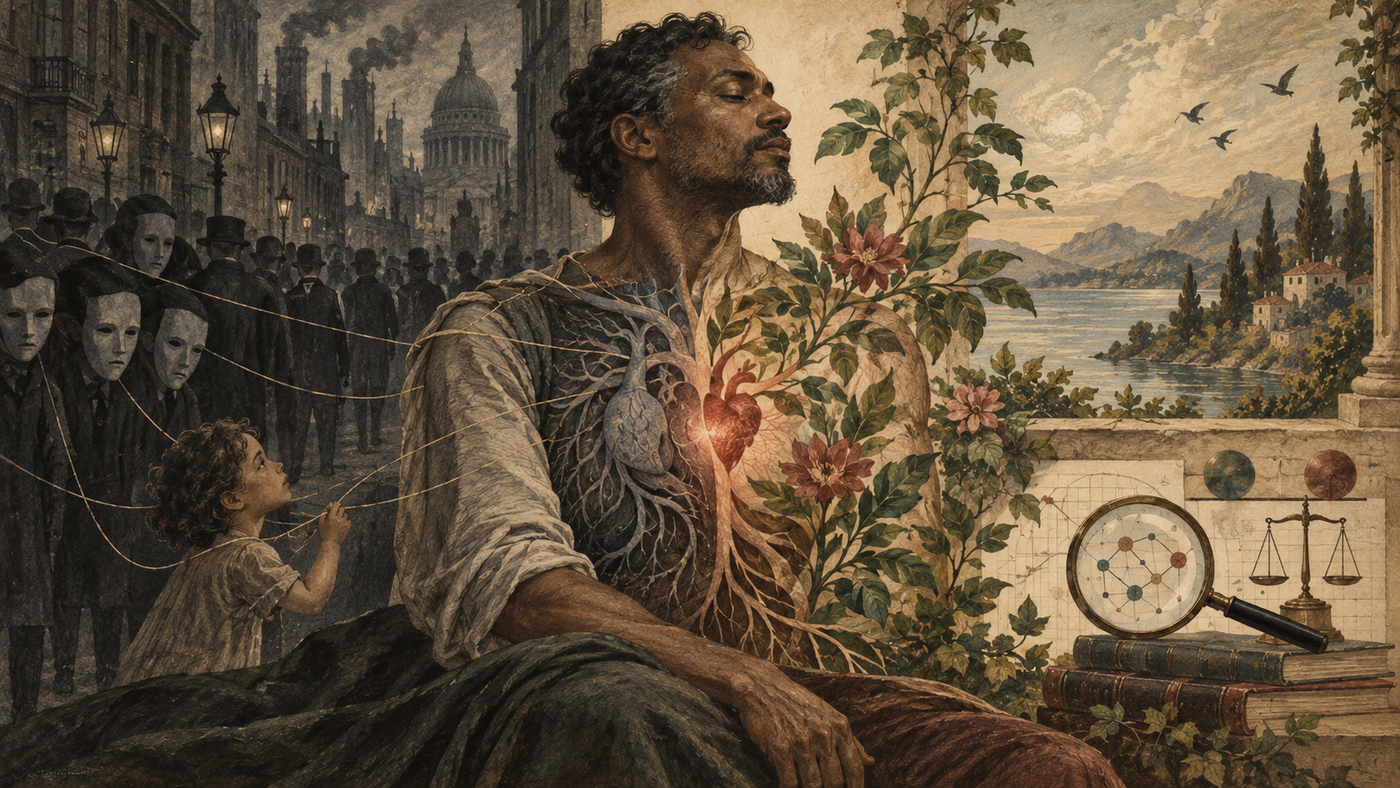
Here's a sentence to make you put down your coffee: what our culture calls "normal" might be quietly making us sick. ☕
That's the provocative heart of The Myth of Normal (2022), written by Hungarian-born Canadian physician Gabor Maté with his son, Daniel Maté. Maté was born in Budapest in 1944, in the middle of war, and spent decades as a family doctor, in palliative care, and working with people struggling with addiction in Vancouver. His earlier books include When the Body Says No (2003) and In the Realm of Hungry Ghosts (2008).
This one is his most ambitious: a book about trauma, illness, and the culture we live in.
The big idea: trauma is what happens inside you
Maté's best-known idea is that trauma isn't the event itself. It's the wound the event leaves inside us, and the disconnection from ourselves that follows.
That's why two people can go through the same storm and come out with very different weather inside.
He also separates "big T" trauma (war, abuse, disaster) from "small t" trauma: being chronically unheard, bullied, or loved only when you were "good." Nobody gets through childhood without a few dents. And no, it's not a competition. There are no medals for suffering the most. 🏅
Attachment vs. authenticity
This is the idea readers quote most. Children need two things:
- Attachment: closeness and connection with their caregivers.
- Authenticity: being in touch with what they truly feel.
When a child senses that showing anger or sadness might threaten the bond, attachment wins. Every time. It's survival.
The cost can show up decades later as people-pleasing, perfectionism, or saying "I'm fine" with a jaw clenched tight enough to crack walnuts. 🥜
Where the book shines ✨
- Compassion. Addiction, anxiety, and illness are treated as understandable responses, not moral failures.
- A social lens. Loneliness, pressure, and inequality are part of health, not just background noise. That's the "toxic culture" of the subtitle.
- A link to real research. The landmark Adverse Childhood Experiences (ACE) study (Felitti et al., 1998), whose first paper surveyed 9,508 adults, found that childhood adversity is linked to higher risk of many adult health problems. Linked, not destined.
Where science pushes back 🔍
A good friend loves a book and argues with it. Here's where researchers push back:
- Personality and disease. Maté suggests that suppressing emotions may contribute to illnesses such as cancer. Very large studies have not found that personality traits predict getting or dying from cancer. So please, don't blame yourself for an illness because you were "too nice."
- ADHD. Maté frames ADHD as rooted largely in early stress. Yet a review of 37 twin studies estimated ADHD's heritability at about 74% (Faraone & Larsson, 2019). Environment matters, but genes have a big seat at the table.
- One cause for everything. Critics argue the book sometimes makes trauma the main explanation for almost everything. Life, and biology, are usually messier.
How to read it well
Read it as a conversation, not a court ruling:
- Notice what resonates. Underline it.
- Notice what feels like blame. Set that part aside.
- Use the book to ask a better question: not "What's wrong with me?" but "What happened to me, and what did I learn to do to survive it?"
Here's the paradox: a book called The Myth of Normal can leave you feeling wonderfully, reassuringly normal. 🌿
Quick FAQ
Is The Myth of Normal worth reading?
Yes, especially if you want a compassionate, big-picture view of trauma and health. Pair it with a critical eye.
Is it evidence-based?
Partly. Some ideas rest on solid research, like the ACE study. Others, like the links between personality and disease, are debated.
How is it different from The Body Keeps the Score?
Van der Kolk focuses on the body and the brain. Maté focuses more on childhood, relationships, and culture. Our review of The Body Keeps the Score covers the other half of the story.
If this topic touches something personal, that's okay. A trained mental health professional can help you explore it safely.