
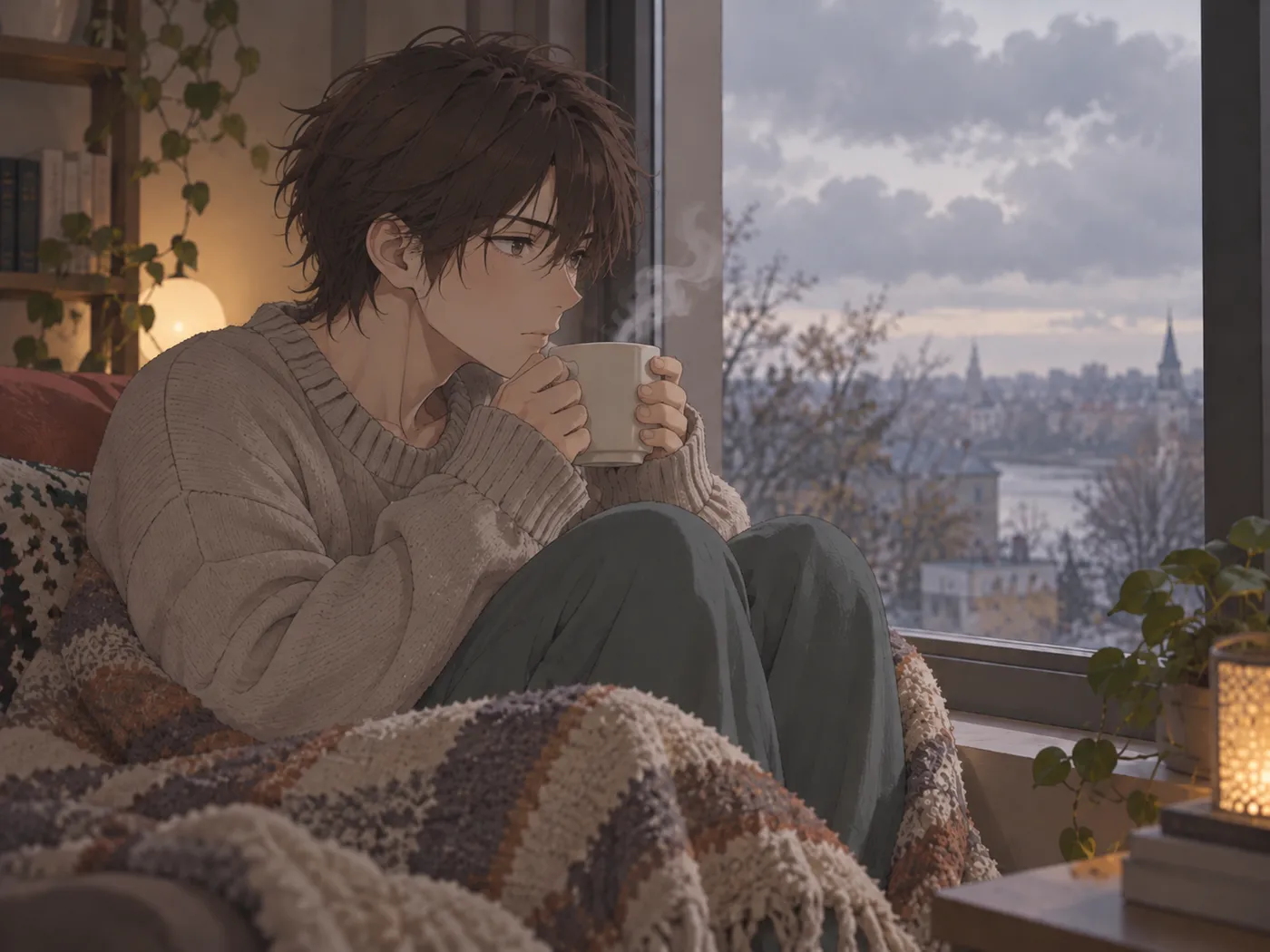
Your favourite song is playing and it's just sound. Dinner tastes like the idea of food. A friend says something funny and you notice it was funny, the way you'd notice the weather. You're not sad, exactly. You're nothing, exactly.
That flatness has a name: anhedonia. It's one of the least talked-about symptoms of low mood, and one of the most frightening, because it takes away the very thing you'd use to climb out.
What is anhedonia?
The word means "without pleasure". The National Institute of Mental Health lists loss of interest or pleasure in hobbies and activities as a core sign of depression. In fact, to be diagnosed, a person must have either low mood or that loss of pleasure, lasting most of the day for at least two weeks.
A 2025 review in Translational Psychiatry estimates that around 70% of people with major depression have clinically significant anhedonia. It also tends to predict a rougher course: longer episodes and a slower response to standard treatment.
Researchers split it in two. Anticipatory anhedonia is when you can't look forward to things. Consummatory anhedonia is when the thing arrives and you can't feel it. Many people have the first before the second.
Anhedonia isn't a failure to enjoy; it's the wanting system going quiet.
Why does pleasure go flat?
Think of the reward system as three steps: wanting, getting, learning. You anticipate, you experience, and your brain files it under "worth doing again". Depression tends to disrupt the first and last steps more than the middle one.
That's why advice like "just do things you used to love" can backfire. You do the thing. It registers as fine. Your brain doesn't bother to file it. Next time, there's even less pull.
The body knows this before the mind does. People with anhedonia often describe heaviness, a dulled sense of taste, or a face that has to be arranged into expressions. If you'd like to notice where the flatness sits, the Emotion map is a quiet place to start.
The problem is rarely the pleasure itself; it's that the brain stopped expecting it.
What helps, according to research
Anhedonia responds poorly to treatments that only target sadness. So Michelle Craske and colleagues built one that targets pleasure directly. In a 2019 randomised trial in the Journal of Consulting and Clinical Psychology, their Positive Affect Treatment outperformed a standard negative-symptom treatment on positive feeling, with lower depression and anxiety at follow-up.
The method is unglamorous. Plan a small pleasant activity. Do it. Then, and this is the part most people skip, slow down and replay it. What did you see, hear, feel in your body? Say it out loud or write it. You're manually doing the filing the brain forgot.
Pleasure in anhedonia is rebuilt by noticing, not by chasing bigger thrills.
The man who cleans toilets and looks at trees
Wim Wenders' film Perfect Days (2023) follows Hirayama, a man who cleans public toilets in Tokyo. Every morning: fold the futon, water the plants, buy a canned coffee, drive to work, cassette tape playing. Every lunch: a sandwich on a bench, a photo of light through leaves.
Nothing happens, and it's one of the most moving films of the decade. What Hirayama does, scene after scene, is exactly the practice above. He anticipates (the tape), he experiences (the coffee), and he savours (the photo). He isn't happy in a loud way. He's present in a stubborn way.
The film never says whether Hirayama was once depressed. But there's a sister, a past he won't discuss, and a final close-up where his face holds joy and grief at once. It looks like someone who learned to feel again, one tree at a time.
Routine isn't the enemy of feeling; done with attention, it's the scaffolding for it.
Try this with a card
This takes four minutes and asks nothing of your mood.
- Draw a card. Don't interpret it. Just look, the way Hirayama looks at leaves.
- Ask: What is the smallest pleasant detail in this image? A colour, a curve, a bit of light. Stay with it for ten slow breaths.
- Ask: What's one detail like that in my real day tomorrow? The first sip of something warm. A step outside. Name it, and plan to notice it on purpose.
That's it. You're not trying to feel great. You're teaching the wanting system that noticing is allowed.
If the flatness has lasted more than two weeks, or you've stopped caring whether you're here at all, please talk to a doctor or therapist; anhedonia is treatable and you shouldn't carry it alone.
When you're ready for a very small thing, draw a card.