
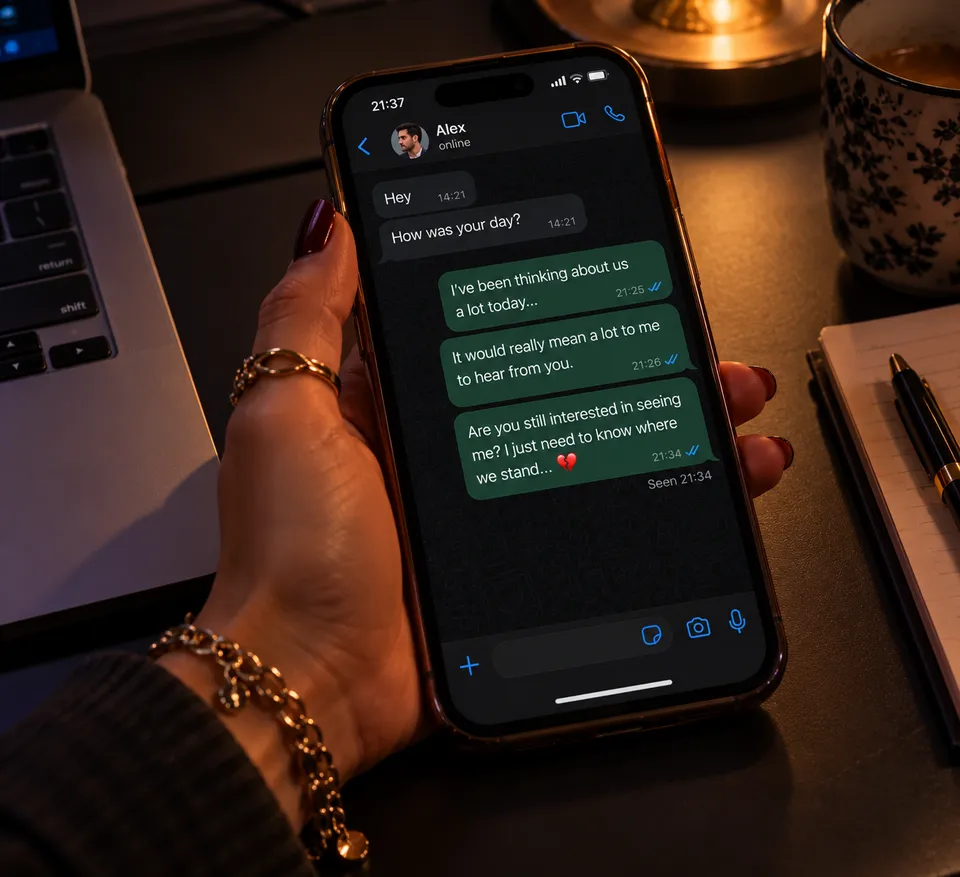
Someone replies "ok." with a full stop. A friend takes a day to answer. Your manager's face does something small during your update. And for two seconds your whole body says: it's over, they hate you, you knew it.
Then logic arrives, late and out of breath. If that is familiar, you have probably met the phrase rejection sensitive dysphoria, or RSD. Let's be precise about it, because precision is kind.
What is rejection sensitive dysphoria, and is it real?
RSD is not a diagnosis. It does not appear in the DSM, and there is no validated test for it. The term comes from clinical writing, most visibly from psychiatrist William Dodson, who described an intense, fast, painful emotional response to perceived or actual rejection in adults with ADHD.
What the research does support is the broader construct of rejection sensitivity. Downey and Feldman defined it in 1996 as a tendency to anxiously expect rejection, perceive it readily in ambiguous behaviour, and react strongly. Later longitudinal work in adolescents found that high rejection sensitivity predicted rising depression and anxiety, and that it tended to erode peer relationships over time, so the feared outcome became more likely. A recent qualitative study in PLOS ONE with students diagnosed with ADHD found three themes: masking, withdrawal, and intense bodily sensations, such as a tight throat, nausea and heat.
So: the flinch is real. The label is informal. Both things are true.
RSD describes an experience, not a disorder, and the experience deserves to be taken seriously either way.
Why does it feel physical?
Because it is. Participants in that PLOS ONE study described the moment as a chair being pulled out from under them. The researchers read those sensations as the sympathetic nervous system firing, the same machinery that handles threat. Your body does not sort "tiger" from "left on read" before it reacts. It reacts, then asks questions.
The pattern is also self-reinforcing. Expecting rejection, you scan for it. Scanning, you find it in a neutral face. Finding it, you pull back or go cold. The other person, confused, pulls back too. Downey and Feldman's model predicted exactly this loop.
The pain is not evidence that you were rejected. It is evidence that your alarm is sensitive.
Eighth Grade and the face that watches itself
Bo Burnham's Eighth Grade is a ninety-minute study of rejection sensitivity in motion. Kayla records confident YouTube advice at night and spends her days reading every face at school for the verdict. The film never shows us anyone being especially cruel to her. That is the point. The cruelty is in the gap between what she sees and what is there.
What makes it bearable, and funny, is her father. He does not fix her. He is simply around, hopelessly, until one night by the fire she manages to ask him whether she makes him sad. Rejection sensitivity softens in the presence of someone who stays.
You cannot think your way out of a flinch. You can be accompanied through it enough times that it shrinks.
What actually helps
Three moves, in order of difficulty.
Name the two seconds. "This is the flinch" is a different sentence from "they hate me". The first leaves room; the second closes the case. Notice where it lands in your body, since in that study the stomach was the most common site, and breathe out slower than you breathe in. You are telling the alarm that you heard it.
Delay the response, not the feeling. Do not reply, apologise, or withdraw in the first ten minutes. Most of the damage from rejection sensitivity comes from acting on the signal while it is loudest.
Check the data with one person. Not everyone. One. The students in the PLOS study said understanding and empathy from others was the thing that helped, and that embarrassment stopped them asking for it. Ask anyway. "Did that land badly, or am I spiralling?" is a complete question. The emotion map can help you find the word for what is underneath before you ask.
Reassurance is not weakness. It is how a sensitive alarm gets recalibrated.
Try this with a card
The next time the flinch hits, wait until your breathing settles, then draw one metaphoric card with the question: what did I just see?
Look at the image for a minute. Notice where your eye goes first and whether the picture feels like it is turning toward you or away.
Then two questions. First: what in this card is actually there, and what am I adding? Second: if the person I think rejected me could see this card, what would they say it shows? Write one line for each. Keep the lines. They are a record of the gap between the alarm and the room.
If the flinch is running your relationships, your work or your sleep, a therapist who understands ADHD and emotion regulation can help you work with it rather than around it.
For now, draw a card. It will not leave you on read.